Keyboard Shortcut Can't Type: Quick Troubleshooting Guide
Struggling with a keyboard shortcut that won’t type? This urgent troubleshooting guide from Shortcuts Lib walks you through quick fixes, a diagnostic flow, and safe steps to restore typing and shortcut reliability on Windows and Mac.


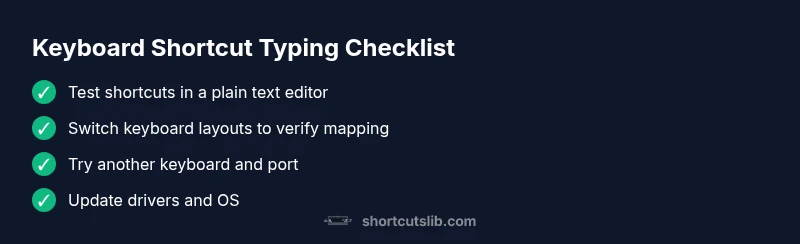
When a keyboard shortcut won’t type, the most likely cause is a misconfigured input or a stuck modifier key. First, test the shortcut in a plain text app to rule out app-specific limits. Then swap keyboards or switch layouts to confirm the issue isn’t hardware or language settings. If the problem persists, move to the diagnostic flow below for deeper checks.
Quick Context: What the phrase "keyboard shortcut can t type" implies
If you’re seeing a symptom where a shortcut won’t type, you’re usually dealing with a mismatch between hardware input, software shortcuts, or language settings. According to Shortcuts Lib, reliable keyboard shortcuts are foundational to productive workflows, so treating the problem as a process rather than a single trick is essential. In practice, you’ll first determine whether the issue is generic (keyboard-wide) or isolated to a single app. That distinction guides every next step and helps you avoid wasted time.
Common Causes Behind Shortcuts Not Typing
Most issues fall into a few broad categories. First, a stuck or misread modifier key (Shift, Ctrl, Alt, or Command) can block typing even if the keys work in isolation. Second, an incorrect keyboard layout or input language can map keystrokes differently, making it seem like a shortcut isn’t working. Third, hardware faults (damaged cable, bad wireless connection) can cause intermittent input, especially on laptops with built-in keyboards. Fourth, outdated drivers or OS-level bugs can interfere with how shortcuts are registered. Finally, some apps reserve or override shortcuts, producing conflicts that hide the expected behavior. Shortcuts Lib analysis suggests that language and driver issues are common culprits, so start there when testing.
Hardware vs Software: Quick Tests You Can Run
To isolate the root cause, perform these quick checks:
- Plug or reconnect the keyboard and test across multiple ports or devices. If a USB keyboard works while the built-in keyboard doesn’t, the problem is likely hardware-related.
- Open a plain text editor and try a few standard shortcuts (e.g., copy/paste, undo). If basic shortcuts fail here, the issue is broader than a single app.
- Change the keyboard layout in the OS settings to a different language and test again. If shortcuts map correctly in the new layout, the original layout was the issue.
- Update or reinstall keyboard drivers from the manufacturer’s site rather than relying on automatic OS updates for a more stable fix. These steps help identify whether the fault lies with hardware, drivers, or system configuration.
Diagnostic Flow in Practice: Symptom leads to diagnosis and fixes
A structured approach beats random trial-and-error. Start with the simplest checks, then progressively escalate. For example, if the symptom is a single key combo not typing in one app, test in other apps to confirm scope. If the issue persists across apps, focus on OS/input settings. If it only happens with hardware changes, inspect cables, batteries, or Bluetooth performance. Following this flow reduces unnecessary steps and helps you spot patterns.
Step-By-Step Fixes for the Most Common Cause
The most common cause is a stuck modifier or wrong layout. Start here:
- Verify all modifier keys are fully released; press and release each modifier several times. 2) Switch to the default keyboard layout (e.g., US English) and test the shortcut. 3) Reconnect or replace the keyboard, then retry in a plain text editor. 4) If the problem remains, update drivers and OS; consider a clean user profile to rule out user-specific settings. 5) Rebind the shortcut in the problematic app or reset to defaults. 6) Reboot if necessary and re-test.
Tips & Warnings: Safe testing practices and known pitfalls
- Always test in a plain text environment first to eliminate app-specific quirks.
- Do not bypass security prompts or install unknown keyboard drivers from untrusted sources.
- If you notice intermittent typing, capture a quick log of when it happens and what program is active.
- Keep backups of your system and user preferences before major resets. If you feel unsure, stop and seek professional help to avoid data loss.
Prevention and Long-Term Reliability: Keeping shortcuts healthy
- Maintain a regular driver and OS update cadence to prevent driver-related shortcut issues.
- Periodically verify keyboard layouts and input languages, especially after system updates or new software installs.
- Create a baseline set of working shortcuts in a neutral editor to quickly spot deviations.
- Consider using a second keyboard for testing to distinguish hardware from software problems.
- Document any app-specific quirks so you can reproduce the issue quickly if it recurs.
When to Seek Help and Next Steps
If the shortcut still won’t type after trying hardware swaps, driver updates, and a clean OS restart, there may be a deeper software conflict or hardware fault. At that point, consult a professional or contact the keyboard manufacturer for warranty support. Remember that consistent backups and a tested recovery plan reduce downtime and protect your workflow.
Steps
Estimated time: 45-60 minutes
- 1
Isolate the problem
Identify whether the issue affects all shortcuts or just one. Try the same shortcut in multiple apps and in a plain text editor to determine scope.
Tip: Document which apps and keyboards are involved to spot patterns quickly. - 2
Check hardware integrity
Reconnect the keyboard, try a wired connection if using wireless, and test another keyboard to rule out a hardware fault.
Tip: Always test across devices to identify whether the problem is hardware-related. - 3
Verify language and layout
Open the OS input settings and switch to a known-good layout, then re-test the shortcut. Ensure language matches your intended input method.
Tip: After changing layouts, re-open the affected app to ensure changes take effect. - 4
Update drivers and OS
Install the latest keyboard drivers from the manufacturer and apply the latest OS updates to fix known input bugs.
Tip: Prefer official driver sources over generic update utilities. - 5
Test app-specific shortcuts
If only one app is affected, check the app’s preferences for shortcut conflicts, and reset to defaults if available.
Tip: Disable extensions or plugins that might override shortcuts in that app. - 6
Rebind or reset shortcuts
If the issue persists, rebind the affected shortcut or reset all keyboard settings in the app and OS to default.
Tip: Keep a backup of your custom shortcuts before resetting.
Diagnosis: Keyboard shortcut won't type
Possible Causes
- highStuck modifier key
- highWrong keyboard layout or input language
- mediumHardware issue (cable, wireless, port)
- mediumOutdated driver or OS bug
- lowApplication-specific shortcut conflict
Fixes
- easyRelease all modifier keys and test again; reseat keyboard
- easySwitch to a default keyboard layout and re-test shortcuts
- easyTry a different keyboard and port; update drivers
- mediumRestart OS and the affected apps; disable conflicting extensions or shortcuts
- mediumRebind the shortcut or reset keyboard settings to default in the app
Questions & Answers
Why won't my keyboard shortcut type even though I can type normally?
This usually happens due to a stuck modifier key, wrong keyboard layout, or app-specific shortcut conflicts. Check hardware, then confirm language settings.
Usually it's a stuck key, layout, or app conflict—check hardware and language settings first.
How can I tell if the problem is hardware or software?
Test typing in a plain text editor and with another keyboard. If it works with another keyboard, the issue is hardware; if not, it’s software or OS settings.
Test with another keyboard and a plain text app to split hardware from software issues.
What should I do if a single app blocks shortcuts?
Check the app’s preferences for shortcut conflicts, reset to defaults, or disable extensions that override shortcuts.
If one app is the culprit, reset its shortcuts or remove conflicting extensions.
Should I update drivers and the OS to fix this?
Yes. Use official sources to update keyboard drivers and keep the OS current to avoid known bugs.
Keeping drivers and OS updated solves many typing shortcut problems.
When should I seek professional help?
If the shortcut still doesn’t work after all checks, consider professional support for hardware diagnostics or software repair.
If it persists after checks, seek professional help.
Watch Video
Main Points
- Test across apps to localize the issue
- Verify hardware before software
- Update drivers and OS regularly
- Rebind shortcuts if conflicts exist
- Establish a safe baseline for future checks