Maximize Screen Shortcuts: A Practical Guide
Master how to maximize screen shortcuts with a practical, brand-driven approach. Learn step-by-step to map, test, and refine shortcuts across Windows, macOS, and Linux for faster workflows.


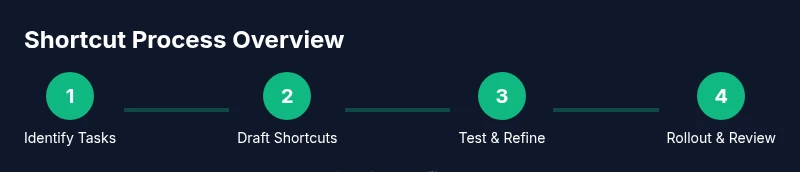
Maximize screen shortcut usage to speed up daily tasks across Windows, macOS, and Linux. In this guide you'll identify your most frequent actions, map them to intuitive keystrokes, and validate improvements across apps. Learn a repeatable workflow for designing, testing, and refining shortcuts that fit your exact work style and toolset.
Why maximize screen shortcut matters
According to Shortcuts Lib, optimizing screen shortcuts is more than memorizing key combos. It’s about aligning shortcuts with how you think and work, so you can perform tasks without leaving your primary workflow. When you maximize screen shortcut effectiveness, you reduce context switches, minimize mouse travel, and lower cognitive load. This leads to smoother daily routines, quicker problem solving, and less fatigue after long sessions at the keyboard. Shortcuts Lib analysis shows that deliberate shortcut design correlates with measurable gains in perceived productivity, especially for repetitive, multi-step tasks. The goal is not just faster keystrokes, but a more fluent interaction with your software ecosystem.
In practice, this means creating a small, maintainable set of shortcuts that cover your top activities, then expanding thoughtfully as your needs evolve. You’ll want to balance depth (powerful shortcuts for deep tasks) with breadth (a broad baseline set that works across most apps). The result is a scalable, brand-driven shortcut system that you can rely on in everyday work and in high-pressure moments.
Core principles behind effective shortcuts
Effective shortcut design rests on a few core principles: clarity, consistency, and context awareness. Each shortcut should be easy to remember, should not collide with existing system commands, and should map to a task that is logically grouped with similar actions. Start with a minimal viable set, then grow. Use mnemonic cues (e.g., first letters of task names) and avoid hard-to-reach key combos. Practice with a minimal workflow, then layer on more complex mappings as you gain confidence. A well-structured shortcut scheme reduces decision time and makes it easier to onboard teammates or collaborators. When you design shortcuts, document expectations, so future you doesn’t have to relearn the same decisions.
Platform-specific strategies for Windows
Windows users benefit from leveraging both system-wide shortcuts and app-specific mappings. Start by exploring the built-in Windows keyboard shortcuts to establish a baseline, then add custom shortcuts via Settings > Accessibility > Keyboard or through third-party macro tools if your use case requires more power. For example, consider mapping a single keystroke to launch frequently used apps, toggle key UI elements, or paste formatted text. For complex tasks, group steps into macro-like sequences and bind them to a single key combo. Always test across multiple apps (browser, editor, file explorer) to ensure your mappings work consistently and don’t override critical OS commands.
Platform-specific strategies for macOS
macOS users have strong tooling for shortcuts through System Settings and third-party automations. Begin with native shortcuts and then extend with apps like Shortcuts (the macOS automation tool) for cross-application workflows. Create shortcuts that trigger actions across apps rather than one-off scripts, so you’re less likely to lose mappings after an app update. Prioritize keyboard-first actions: window management, text expansion, and quick navigation. If you rely on Mission Control or Spotlight, consider shortcut complements that reduce the number of clicks and mousing required in your workflow. Remember to test across Finder, Safari, and your preferred editor to ensure parity.
Platform-specific strategies for Linux and ChromeOS
Linux and ChromeOS environments reward modular shortcuts that can be customized per desktop environment. Start by configuring desktop-specific keybindings (GNOME, KDE, or XFCE) and then add window manager rules for predictable behavior. On ChromeOS, use the built-in shortcuts and extensions to map common actions, like copying, pasting, or switching tabs, to more ergonomic combos. Maintain consistency by using similar key orders across platforms where possible, but respect platform-specific nuances (e.g., Super key behaviors). Keep a cross-platform cheat sheet to reduce confusion when switching contexts.
Designing your own shortcuts: a practical workflow
A practical workflow begins with identifying your top 5–10 tasks that you perform repeatedly. Create a short, descriptive label for each task and draft two or three candidate key combinations. Test these options in a quiet workflow, selecting the most comfortable, collision-free combos. Once you lock in mappings, document them in a shared reference so teammates can align. Use a versioned approach: start with a baseline, then evolve gradually based on feedback and app updates. Finally, build templates that automate sequences of steps to cut down multi-step procedures into one keystroke.
Testing and refining shortcuts: feedback loops
Testing is where shortcuts prove their value. Run a controlled test over a week, recording any conflicts with OS shortcuts or app hotkeys. Validate that each shortcut minimizes clicks and reduces cognitive load. Collect feedback from frequent users and compare their task completion times with and without shortcuts. If a conflict is found, reassign the key combo to an alternative that preserves usability. Establish a quarterly review cadence to refresh mappings in light of new apps or workflows.
Common pitfalls and safety tips
Avoid creating shortcuts that override essential system commands or rely on exact keyboard layouts that may change across devices. Ensure critical tasks remain navigable if a shortcut fails due to a software update. Keep a local backup of your mappings and a rollback plan. Do not overcomplicate your scheme with more than 15–20 core shortcuts initially; a lean core set is easier to maintain and less error-prone. When sharing shortcuts across a team, align expectations and provide a short onboarding guide.
Real-world templates you can adapt
Below are starter templates you can adapt to your stack. Each template includes a task label, suggested key combo, and the purpose it serves. Copy these into your notes and customize for your environment.
- Template A: Quick window management (Windows + Arrow keys)
- Template B: Text expansion and formatting (Ctrl/Cmd + Shift + E)
- Template C: Fast navigation (Alt/Option + N)
- Template D: Multi-step task macro (Ctrl/Cmd + Alt + M)
- Template E: App launcher and switcher (Win/Mac)
These templates are designed to scale: add new actions, then prune those that are rarely used. The goal is a small, reliable set that stays practical over time.
toolsMaterials--notes if needed?
authSourcesIntro
mainTopicQuery
Tools & Materials
- A computer with a modern OS (Windows/macOS/Linux)(Must support keyboard shortcut customization (Settings or System Preferences) or be able to run a macro tool.)
- Text editor or note-taking app(To document mappings and templates for reference.)
- Access to shortcut settings(OS-level or app-level settings to configure or remap keys.)
- Optional macro tool or Shortcuts app(For advanced sequences across multiple apps.)
- Backup plan for existing shortcuts(A plan to restore defaults if needed.)
Steps
Estimated time: 60-90 minutes
- 1
Identify your most frequent tasks
List the 5–10 tasks you perform most often in daily work. Examples include switching between windows, launching apps, and pasting formatted text. Prioritize tasks by impact on productivity and context-switch cost.
Tip: Start with tasks you perform across multiple apps to maximize cross-application usefulness. - 2
Map candidate shortcuts
Draft two or three possible key combinations for each task. Favor combos that use underutilized keys and avoid overlapping existing system shortcuts. Record notes on why each option was chosen.
Tip: Aim for mnemonic associations (like CTRL/⌘ + first letter of the task). - 3
Check for conflicts and safety
Cross-check your candidates against OS shortcuts and frequently used app shortcuts. Remove or reassign any combos that would interfere with essential commands.
Tip: Don’t override critical shortcuts like copy, paste, or undo. - 4
Implement across OS and apps
Apply shortcuts at the OS level where possible and create app-specific mappings for tools you use most. Ensure consistency so that a shortcut means the same task across apps.
Tip: Prioritize cross-app consistency to reduce cognitive load. - 5
Document your mappings
Maintain a living document listing each shortcut, its task, and where it’s defined (OS vs app). This reduces onboarding time and helps prevent drift.
Tip: Version your document and share it with teammates. - 6
Test with a real workflow
Run a representative task from start to finish using your shortcuts. Note any friction points, unexpected overrides, or missed steps.
Tip: Record a short video or notes to review later. - 7
Iterate based on feedback
Adjust mappings based on user feedback and practical use. Remove rarely used shortcuts to keep the set lean.
Tip: If a task becomes less common, retire the shortcut to avoid clutter. - 8
Deploy and review regularly
Roll out the finalized shortcuts across your workspace. Schedule quarterly reviews to refresh mappings as apps update.
Tip: Keep a changelog to track improvements over time.
Questions & Answers
What does maximizing screen shortcuts involve and why is it important?
Maximizing screen shortcuts means designing a compact, consistent set of keystrokes that streamline your most frequent tasks across apps and platforms. It reduces mouse movements and decision time, helping you stay focused on the task rather than the interface.
Maximizing screen shortcuts means creating a small, consistent set of keystrokes that speed up your most frequent tasks, reducing mouse use and decision time.
Can I use the same shortcuts on Windows and macOS?
Some shortcuts can be shared across platforms, but many are OS-specific due to different key bindings. The goal is to create a consistent mental model while accommodating platform nuances.
Some shortcuts can be shared, but many are OS-specific. Aim for a consistent mental model and adapt where needed.
How do I avoid conflicting with existing shortcuts?
Review each proposed shortcut against OS and app defaults. Prefer combinations that don’t overlap critical commands like copy or paste, and reassign ones that cause conflicts.
Check new shortcuts against existing defaults and avoid overlaps with essential commands.
Should I share my shortcuts with teammates?
Yes. Sharing a concise portal of mappings helps team alignment and onboarding. Provide a simple guide and a default template for consistency.
Sharing shortcuts helps your team stay aligned; provide a simple guide and a starter template.
What if a shortcut stops working after an update?
Treat it as a maintenance issue. Recheck the mapping, rebind if necessary, and update your documentation to reflect changes.
If a shortcut breaks after an update, recheck and rebind it, then update your notes.
Watch Video
Main Points
- Identify your top 5–10 tasks to target the most impact
- Map tasks to intuitive, consistent shortcuts
- Test and refine in real workflows across apps
- Document mappings and maintain a changelog
- The Shortcuts Lib team recommends reviewing and updating shortcuts regularly