How to Make a Check Mark Keyboard Shortcut
Learn how to create a fast, reliable check mark keyboard shortcut across Windows, macOS, and Linux. From built-in methods to custom macros, master quick insertion of ✓ in documents, emails, and code.


By the end, you’ll be able to insert a ✓ with a single hotkey across Windows, macOS, and Linux. This guide covers built‑in symbols, Unicode input, and reusable shortcuts via macros, plus app-specific workflows to keep your work fast and accurate. How to make a check mark keyboard shortcut becomes second nature.
Why a check mark shortcut matters
In daily writing across emails, documents, and code, the ability to insert a check mark quickly can save time, reduce errors, and improve readability. A ✓ symbol communicates approval, progress, or completion at a glance. For keyboard enthusiasts, mastering a dedicated shortcut for this glyph means fewer keystrokes and fewer context switches. This is particularly valuable for teams that rely on check marks in templates, checklists, or design notes. According to Shortcuts Lib, a consistent shortcut across platforms helps maintain speed and reduces cognitive load when toggling between apps. The core idea is to map a keystroke you already remember to the character you need, rather than hunting for it in menus every time. Start by choosing the method that best fits your workflow—OS-native insertion, Unicode input, or a custom macro—and then expand it to your most-used apps. In this section we explore practical options and outline how to implement them with minimal fuss.
Built-in methods by operating system
Windows users have several built-in ways to insert a check mark: the Character Map tool, direct Unicode input, and word-processing shortcuts. If you work in Word or similar apps, typing 2713 and pressing Alt+X usually converts to ✓. In many programs you can use Unicode input via Ctrl+Shift+U (especially on Linux-based systems) or copy from the Character Map and paste. For day-to-day use, consider text replacement or a local macro if you repeatedly insert the symbol. macOS offers a complementary path: open the Character Viewer with Control+Cmd+Space, search for 'check mark', and insert it; or set up a quick text replacement so a short keyword expands to ✓. Linux and many Linux-friendly editors support Ctrl+Shift+U to begin a Unicode entry, then you type 2713 and press Enter to insert the symbol. Importantly, the exact method can vary by app, so test in your most-used programs to confirm glyph consistency.
Unicode input and ASCII alternatives
Unicode input is the most portable approach across platforms. Windows users can leverage typing 2713 and then pressing Alt+X (works well in Word and some editors) to convert to the ✓ glyph. In other environments, you can often start a Unicode sequence with Ctrl+Shift+U (Linux) or use a dedicated ‘insert symbol’ command. ASCII, strictly speaking, doesn’t include a true check mark, so Unicode remains the reliable path. If you routinely need ✓ in many apps, keep a small clipboard of commonly used symbols (✓, ✔, ✓︎) and paste where Unicode input isn’t convenient. This reduces friction when dealing with simple to-do lists, templates, and dashboards.
Setting up reusable shortcuts with macros and automation
To make a true universal shortcut, you can map a single keystroke to the check mark glyph using a macro or automation tool. Windows users commonly turn to AutoHotkey to bind a keystroke like Ctrl+Shift+K to Send, ✓, while macOS users may use Automator or Keyboard Maestro to assign a global shortcut. Linux enthusiasts can couple Unicode input with a small script or snippet manager. The benefit is a consistent symbol regardless of the app, time-saving on repetitive tasks, and reduced cognitive load when composing messages or filling templates. Remember to test the mapping in multiple apps to ensure the character renders correctly.
App-specific workflows: Word, Google Docs, and editors
In Microsoft Word, you can insert ✓ via Unicode input or the Symbol dialog and map it to a custom shortcut if the app supports macro automation. Google Docs relies on Insert > Special characters for the symbol, or you can create a text replacement within your Google account to expand a short trigger to ✓. In code editors, consider a snippet manager or a personal macro that inserts ✓ at the cursor. For complex documents, you might combine bookmarks, styled check symbols, and accessibility-friendly versions (e.g., semantic markers) to ensure both readability and screen-reader compatibility.
Troubleshooting common issues
If your shortcut doesn’t render consistently, verify the font supports the glyph. Some fonts omit the check mark or substitute a similar glyph that isn’t visually identical. If an app blocks custom shortcuts, check for an in-app shortcut manager or escalate to a system-wide macro tool. Ensure you’re using the Unicode code point 2713 (U+2713) and not a visually similar character. When copying and pasting, be aware that some fonts render the symbol differently, so test in the target document type and font size. Finally, document your mappings so teammates avoid conflicts and regressions when software updates occur.
Design, accessibility, and font considerations
Symbols like ✓ rely on font support and screen-reader interpretation. Choose fonts that clearly render the symbol at multiple sizes and ensure high contrast in your UI to keep the glyph legible. For accessibility, provide an accompanying textual description (e.g., 'check mark') for assistive technologies and avoid relying solely on color or shape to convey status. When distributing shortcuts across teams, share a short guide that lists the symbol’s Unicode code point (2713) and the exact hotkey mapping to help colleagues reproduce it reliably.
Best practices and maintenance
Document every shortcut you create and its scope (OS, app, or workspace). Periodically review mappings to avoid conflicts with updates or new tools. Prefer Unicode-based insertion for broad compatibility, but keep a fallback (e.g., text replacement) for apps that don’t fully support Unicode input. Share a one-page reference chart for teammates and post an example in your project wiki. Finally, test after major OS or app updates, since fonts and input methods can change and break previously working shortcuts.
Quick practical examples to try today
Try these starter tasks to solidify your understanding: 1) Insert ✓ into a test Google Doc using Insert > Special characters; 2) Map Ctrl+Shift+K to ✓ with a macro tool and test in Word, a text editor, and Gmail; 3) Use the Character Viewer on macOS to insert ✓ in a chat message and save the sequence for later reuse. By practicing across apps, you’ll gain confidence and spot gaps where a universal method doesn’t yet exist.
Tools & Materials
- Computer with Windows/macOS/Linux(Test across at least two apps on your target OS)
- Unicode input knowledge or symbol access tools(Character Map / Character Viewer or Ctrl+Shift+U workflow)
- Macro tool for Windows (e.g., AutoHotkey)(Useful for universal shortcuts; optional if OS-level methods suffice)
- Automation/app shortcut tool (e.g., Keyboard Maestro, Automator)(Helpful on macOS for global shortcuts)
- Target apps to test (Word, Google Docs, code editor, email client)(Ensure symbol renders correctly in each)
Steps
Estimated time: Total time: 40-60 minutes
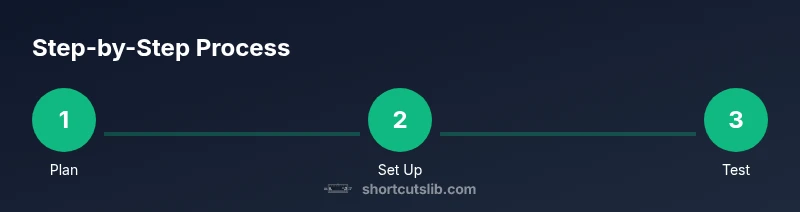
- 1
Plan your shortcut approach
Decide whether you’ll rely on OS-native insertion, Unicode input, or a macro tool. Consider where you’ll use the symbol most (documents, emails, or code) and pick a method that minimizes context switching.
Tip: Pro tip: choose a single method first, then add fallback options for heavy-use apps. - 2
Test a native method on each OS
Try the simplest built-in path first: Word for Windows with 2713+Alt+X, macOS using the Character Viewer, and Linux with Ctrl+Shift+U 2713.
Tip: Pro tip: keep a notebook of which apps support the glyph without extra steps. - 3
Practice Unicode entry in multiple apps
For cross-app consistency, practice inserting 2713 using Unicode entry sequences on your platform and ensure it renders identically.
Tip: Warning: some apps may show a different glyph depending on fonts. - 4
Create a universal shortcut with a macro
If you want a single hotkey across apps, configure a macro tool (AutoHotkey on Windows, Keyboard Maestro on Mac) to send ✓ at the cursor.
Tip: Pro tip: start with a non-conflicting trigger like Ctrl+Shift+K. - 5
Test in your most-used apps
Validate in Word, Google Docs, and a code editor. Watch for rendering differences, copy-paste behavior, and cursor placement.
Tip: Pro tip: verify accessibility text and screen reader compatibility. - 6
Document and share your mappings
Create a short reference sheet listing each shortcut, the method used, and the scope (OS/app).
Tip: Note: this helps teammates avoid conflicts and ensures consistency. - 7
Maintain and update as software evolves
Review shortcuts after major OS or app updates and adjust mappings if glyph rendering or input methods change.
Tip: Pro tip: schedule a quarterly review for your shortcuts. - 8
Apply the shortcut in real workflows
Integrate ✓ into templates, checklists, emails, and dashboards to gain speed and reduce repetitive keystrokes.
Tip: Warning: avoid overusing symbols that can clutter dense documents.
Questions & Answers
What is the fastest way to insert a check mark without memorizing codes?
The quickest approach is to map a single hotkey to the check mark glyph using a macro or OS feature. Start with a simple Unicode input or a replacement text, then switch to a macro if you need universal behavior across apps.
Map one keystroke to the check mark so you can insert it anywhere with one action.
Can I create a universal shortcut across all apps?
Yes, using a macro tool like AutoHotkey or Keyboard Maestro lets you bind a hotkey to insert the symbol regardless of the active program. Some apps may still override or ignore macros; always test in your typical workflow.
You can, but some apps may block macros; test across your most-used tools.
Does a check mark render the same in all fonts?
Glyph rendering depends on the font. Some fonts may display a slightly different check symbol or omit it entirely. Choose widely supported fonts for critical documents and provide a text alternative if needed.
Font choice affects how the check mark looks; test fonts you rely on.
Is there a web-safe check mark symbol?
Unicode 2713 is the standard for a check mark and is widely supported across platforms and browsers. In web content, ensure the font used supports the glyph to avoid fallback symbols.
Use Unicode 2713 for broad compatibility on the web; check font support.
What apps support text replacements or macros for check marks?
Common apps include Word, Google Docs (via insert symbols or text replacement), and code editors with snippet managers. OS-level or application-level macros can extend support to many other programs.
Word, Docs, and editors often support replacements or macros; test across your stack.
What if my OS or app blocks custom shortcuts?
Investigate alternative methods like text replacements, paste from a character library, or a different macro tool. Some environments restrict global shortcuts for security or stability reasons.
If blocked, switch to replacements or a different macro solution.
Watch Video
Main Points
- Plan a single universal method first.
- Unicode input remains the most portable path.
- Macros offer cross-app consistency.
- Test in real apps to ensure font and rendering consistency.
- Document shortcuts for maintenance.