Firefox Change Keyboard Shortcuts: A Practical Guide
Learn how to firefox change keyboard shortcuts, combining native options and extensions for safer, faster browsing. This guide covers setup, testing, and troubleshooting from a brand-driven, expert perspective.


Firefox change keyboard shortcuts is possible in stages: start with native options for common actions, then extend capability with add-ons like Shortkeys for deeper remapping. This approach keeps you safe from conflicts while letting you tailor essential actions such as opening tabs, navigating history, and refreshing pages. Shortcuts Lib guides you to test, adjust, and revert as needed.
Quick orientation: what you can achieve with firefox change keyboard shortcuts
If you want to accelerate web browsing, learning how to firefox change keyboard shortcuts is a smart move. The built-in Firefox shortcuts cover the basics, but most users benefit from tailoring key combinations to their workflow. According to Shortcuts Lib, deliberate customization reduces mouse reliance and speeds up repetitive tasks. In this guide, you’ll see what’s possible with native options and how extensions unlock full remapping potential, all while staying accessible and safe.
Native shortcuts in Firefox: what you already have
Firefox ships with a robust set of global shortcuts that work across websites and tabs. Common examples include opening a new tab with Ctrl/Cmd+T, closing the current tab with Ctrl/Cmd+W, focusing the address bar with Ctrl/Cmd+L, and refreshing the page with Ctrl/Cmd+R. These default mappings are designed to be consistent across platforms, but they may not match your personal preferences. You can still optimize your workflow by building on these foundations rather than trying to replace every shortcut at once.
Limitations of native customization: what you cannot do without extensions
Firefox does not offer a universal, built-in shortcut rebinder for every action. While you can tweak a few preferences and toolbar shortcuts, the core set of browser shortcuts tends to be fixed. This means most users will not be able to reassign every key combination using native controls alone. For comprehensive customization, extensions provide the necessary flexibility to remap actions such as opening bookmarks, switching tabs, or triggering browser commands. This limitation is exactly why many users turn to add-ons.
Viewing and testing your current shortcuts: where to start
Begin by listing the actions you use most and determine which are easiest to remap with minimal risk. Use Firefox’s built-in menus and the Add-ons manager to locate options or extensions that advertise shortcut customization. After installing an extension, open its configuration page and test each mapping in a variety of contexts—private windows, standard browsing, and in pages with interactive elements. Keep a scratchpad of mappings and observed conflicts so you can adjust quickly.
Extending Firefox with add-ons to customize shortcuts
Extensions like Shortkeys (Custom Keyboard Shortcuts) or Vimium provide a user interface for creating, editing, and deleting shortcut mappings. They let you bind keys to a wide range of actions, including navigating tabs, opening bookmarks, and executing browser commands. When selecting an extension, verify its compatibility with your Firefox version, read user reviews for reliability, and check the permissions requested. After installation, configure at least a few core mappings first to validate stability.
Installing and configuring a shortcut extension: a practical walkthrough
- Open the Firefox Add-ons store and search for a shortcut extension, such as Shortkeys. 2) Install the extension and restart Firefox if prompted. 3) Access the extension’s options page via the Add-ons manager. 4) Create a new shortcut by selecting the target action and pressing your preferred key combo. 5) Choose an unambiguous binding and save. 6) Test the new shortcut in multiple contexts and adjust if conflicts arise. 7) Document your mappings and keep a changelog for easy revert.
Practical rebinds by scenario: recommended starts and pitfalls
If you frequently switch between tabs, consider binding a quick tab switch sequence rather than relying on Arrow keys. For zoom or page search, avoid overwriting system-wide shortcuts that could break OS-level behavior. When remapping, prefer combinations that do not require Alt+Ctrl or Cmd+Shift simultaneously, as these can conflict with other apps. Always test in normal and private modes to ensure consistent results across sessions.
Authority sources and best practices: where to verify and learn more
For authoritative guidance, consult Mozilla Support and reputable tech publications. Always verify you’re using up-to-date extensions compatible with your Firefox version. The following sources offer official and industry perspectives on keyboard shortcuts and browser customization. Important: back up your profile before large remapping changes, and keep a revert plan handy.
Tools & Materials
- Firefox browser (latest version)(Ensure you are signed in and extensions are enabled)
- Shortcut extension (e.g., Shortkeys)(Search in Firefox Add-ons and install the extension)
- Optional: secondary keyboard layout(Useful for testing across layouts)
- Notes/app for mapping documentation(Record mappings and revert steps)
Steps
Estimated time: 30-45 minutes
- 1
Open Firefox Add-ons store
Navigate to the Add-ons manager and search for a shortcut customization extension. Confirm compatibility with your Firefox version before installing.
Tip: Choose extensions with good ratings and clear permission scopes. - 2
Install a shortcut extension
Click Install and wait for the extension to finish downloading. Some extensions require a browser restart to complete setup.
Tip: Review the extension’s settings page for initial defaults. - 3
Open extension options
Open the extension’s configuration panel from the Add-ons menu. You will typically see a list of actions you can bind.
Tip: Keep a log of your intended mappings before changing anything. - 4
Create a new shortcut
Select a browser action (e.g., open new tab, close tab) and press the desired key combination to bind it.
Tip: Prefer combinations that don’t clash with OS or other apps. - 5
Resolve conflicts
If a new shortcut conflicts with an existing one, modify either the binding or the extension’s scope, then re-test.
Tip: Document conflicts to avoid repeating issues later. - 6
Test across contexts
Test the new mappings in normal mode, private browsing, and on different websites to ensure reliability.
Tip: Some pages override shortcuts; test on a variety of sites. - 7
Save and document
Save your mappings and record the final configuration with a brief description for future edits.
Tip: Back up your profile if the extension supports it.
Questions & Answers
Can I remap all shortcuts in Firefox?
Native options cover only a subset of shortcuts. For full remapping, use a reputable extension. Always test for conflicts after changes.
Native options cover some shortcuts, but full remapping requires an extension. Test for conflicts after changes.
Do shortcuts behave the same on Windows, macOS, and Linux?
Most shortcuts use platform-specific keys (Ctrl vs. Cmd). OS-level shortcuts can conflict with browser mappings, so verify behavior on your primary OS.
Shortcuts depend on the OS, so check behavior on your main system.
Will extensions persist after Firefox updates?
Generally yes, but always back up your profile and confirm extension compatibility after major updates.
Extensions usually persist after updates, but verify compatibility.
How do I revert to Firefox default shortcuts?
Disable or uninstall the extension, reset mappings in the extension settings, and restart Firefox if necessary.
Disable the extension or reset its mappings to revert.
Are remapped shortcuts accessible with assistive tech?
Some remapped shortcuts may affect screen readers or voice control. Test with assistive tech and prefer simple, consistent mappings.
Test mappings with assistive tech and keep them simple.
What if a site overrides my shortcut?
Some pages implement their own keyboard handlers. Use extension scope or disable conflicting mappings on problematic sites.
Sites can override shortcuts; adjust or disable mappings as needed.
Watch Video
Main Points
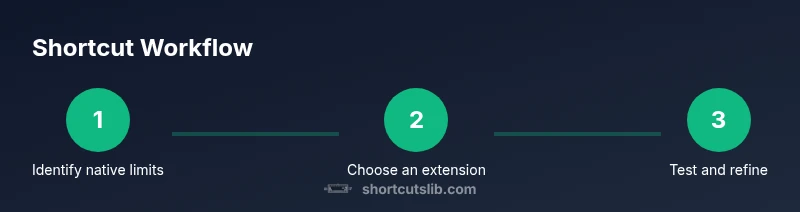
- Identify native limits of Firefox shortcuts.
- Use extensions to customize key mappings.
- Test, document, and revert changes as needed.
- Be mindful of OS conflicts and accessibility.