Can you change keyboard shortcuts in Firefox? A practical guide for 2026
Learn how to customize Firefox keyboard shortcuts in 2026. This guide covers built-in options, extension remapping, and safe testing to tailor your workflow.


Yes, you can influence many Firefox shortcuts, but not every key can be remapped with built-in options. This quick guide outlines what’s adjustable, what needs extensions, and how to test changes. According to Shortcuts Lib, built-in controls are limited, so for substantial remapping you’ll typically rely on add-ons or targeted tweaks. Use this as a starting point for a personalized Firefox workflow.
Can you change keyboard shortcuts in Firefox? What’s actually possible in 2026
For many power users, customizing shortcuts creates a smoother workflow; for others it’s unnecessary friction. The short answer is: you can influence a portion of Firefox shortcuts, but not every key can be remapped with built-in controls. This is not only a product limitation but also a design choice intended to preserve usability and consistency across web apps. In this guide, we’ll walk through what’s available, what requires extensions, and how to test changes safely. According to Shortcuts Lib, built-in controls are limited, so for substantial remapping you’ll typically rely on add-ons or targeted tweaks. This article explains a practical approach to tailor Firefox shortcuts while minimizing disruption to your daily browsing. By the end, you’ll know where to start, what to avoid, and how to revert if a change doesn’t pay off. The information reflects industry best practices as of 2026 and is designed for tech users and keyboard enthusiasts who want reliable, practical guidance.
What Firefox supports today
Firefox does not expose a universal “shortcuts editor” in its standard settings. The browser does provide a small set of built-in remapping options, primarily for highly visible actions, but many essential keys remain fixed to preserve consistency across web apps. This means a user-friendly, all-encompassing remapping experience is not guaranteed without external help. Shortcuts Lib’s analysis shows that users who need broad changes typically turn to extensions or targeted tweaks, while casual users may only adjust a handful of actions. This section explains what’s feasible out of the box, what is limited by design, and how to decide if you need more power than the native UI offers.
Extending Firefox shortcuts with add-ons
If built-in options fall short, extensions are the most common path to broader remapping in Firefox. Look for reputable add-ons that explicitly advertise keyboard shortcut customization and verify compatibility with your Firefox version. Extensions can provide a centralized interface to rebind actions across tabs, find tools, and navigation commands. When evaluating extensions, check user reviews, update frequency, and permissions requested. Remember that extensions operate with browser scope, so they can affect stability and compatibility with other plugins. Shortcuts Lib reminds readers to pick extensions that are actively maintained and documented.
A practical plan to determine what to change
Before changing anything, define a clear goal: which workflows will benefit from new shortcuts, and which actions should remain as-is. Start with 2–3 high-frequency shortcuts you find disruptive and plan changes around those. Use a simple note to map your intended bindings, then test in a controlled environment (one or two sites with typical forms, menus, and navigation). This planning phase reduces the risk of accidental UI changes and makes it easier to roll back if the results aren’t worth the effort.
Using about:config and its caveats
Advanced users sometimes explore about:config to override key behaviors, but this path carries risks. Changes here can impact browser stability and security; a misstep could affect how Firefox handles input globally. If you choose this route, back up your profile first, document each change, and revert quickly if you notice unexpected behavior on sites you use daily. For most readers, extensions offer a safer, more maintainable route to remapping.
Backup, export, and restore strategies
A robust backup strategy is essential whenever you experiment with shortcuts. Start by exporting your Firefox profile or creating a system restore point if available. After implementing a remapping approach (whether via extension or config tweak), test across multiple sessions and document any adjustments. If something goes wrong, you can restore from the backup and reapply changes more cautiously. Shortcuts Lib emphasizes the value of rollback plans whenever you alter keyboard shortcuts.
OS differences and edge cases
Keyboard shortcuts can behave differently across Windows, macOS, and Linux due to platform-specific conventions. For example, the modifier keys (Ctrl vs Cmd) vary by OS, and some OS-level shortcuts may collide with Firefox mappings. When planning changes, create variations for each major OS you use and verify that mappings translate well. This cross-platform awareness helps prevent workflows that work on one system but fail on another.
Common pitfalls and troubleshooting
Common pitfalls include conflicting shortcuts (two actions bound to the same key), extensions that don’t update promptly after Firefox releases, and changes that only apply in certain contexts (like a new tab page vs a typical webpage). If you encounter conflicts, reassess your bindings, disable conflicting shortcuts, or revert the extension in stages. Keeping a short changelog helps you track which remappings were most reliable and which caused issues.
Practical remapping examples you can try
A handful of practical remapping ideas can kickstart your customization journey without overwhelming your setup. For example, you might rebind a rarely used function to a commonly pressed key combo, or you can assign frequently used navigation shortcuts to higher-contrast keys for faster access. Always prefer non-conflicting bindings and test across both standard web pages and complex web apps. Remember that the goal is a smoother, faster workflow, not a maze of confusing keys.
Next steps and learning resources
After testing and refining your shortcuts, schedule a monthly quick check to ensure your mappings still align with your needs and any Firefox updates. Consider bookmarking official Mozilla support pages for keyboard shortcuts, and follow community discussions about best practices in 2026. This ongoing practice helps you stay aligned with evolving browser capabilities while preserving a stable workflow.
Authority sources
For deeper context and verification, consult Mozilla Support and W3C resources on keyboard interactions:
- https://support.mozilla.org/en-US/kb/keyboard-shortcuts
- https://www.mozilla.org/en-US/</span>firefox/keyboard-shortcuts</span>
- https://www.w3.org/TR/keyboard/
Tools & Materials
- Computer with Firefox installed(Ensure you have an up-to-date version (2026 release))
- Backup method for Firefox profile(Create a backup before making changes)
- Extension for shortcuts remapping (e.g., reputable add-on)(Optional, use if built-in options are insufficient)
- Notes app for mapping plan(Keep track of your mappings)
Steps
Estimated time: 60-90 minutes
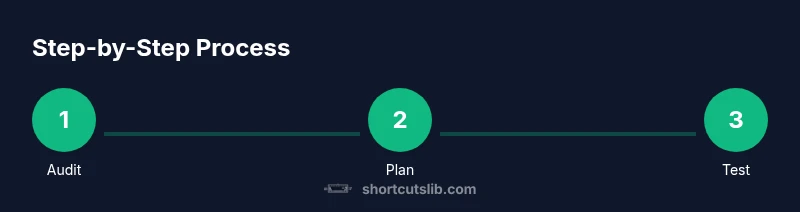
- 1
Audit current shortcuts
Identify frequently used shortcuts and note consequences of changing them. Save a baseline.
Tip: Start with 3 must-have shortcuts to avoid overhauling your workflow. - 2
Check built-in options
Look in Firefox settings and help to see if the desired remap is supported directly.
Tip: Some shortcuts may be hard-coded and resistant to changes. - 3
Back up your Firefox profile
Create a safe restore point before applying any changes in config or extensions.
Tip: If something goes wrong, you can restore quickly. - 4
Consider an extension for remapping
Choose a reputable extension that supports the shortcuts you want to map.
Tip: Read reviews and ensure compatibility with your Firefox version. - 5
Configure the extension
Set new keybindings for the chosen actions, avoiding conflicts.
Tip: Commit to changes for a small subset first. - 6
Test your new mappings
Open different sites and check if new shortcuts work as intended.
Tip: Test with forms, menus, and common web apps. - 7
Resolve conflicts
If overlapping shortcuts occur, reassign or disable the conflicting one.
Tip: Keep a conflict log to track issues. - 8
Document and revisit
Record your final mappings for future reference and audits.
Tip: Review after major Firefox updates.
Questions & Answers
Can I remap all keyboard shortcuts in Firefox?
Fully remapping every shortcut isn’t supported in Firefox by default. You’ll typically rely on extensions or targeted tweaks for broader changes, while some actions remain fixed.
Firefox doesn’t let you remap every shortcut by default. Extensions usually handle broader changes, but some actions stay fixed.
Are there risks to using about:config or extensions?
Tweaking about:config or installing extensions can affect browser stability or security. Always back up data, test changes incrementally, and install extensions from trusted sources.
Tweaks can affect stability and security; back up data and test gradually with trusted extensions.
Will OS differences affect my remapped shortcuts?
Yes. Keyboard layouts and OS-level shortcuts vary by Windows, macOS, and Linux. Plan mappings with cross-platform consistency in mind.
OS differences matter; plan for cross-platform consistency when remapping.
How do I revert to Firefox default shortcuts?
Disable or remove the extension or reset the changed preferences, then restart Firefox to ensure defaults are restored.
Disable the extension or reset the changed preferences and restart Firefox.
Do I need to restart Firefox after changes?
Some changes apply on the fly, but others require restarting Firefox. If in doubt, restart after saving new mappings.
Some changes require a restart; when unsure, restart after saving mappings.
What’s a safe way to test remapped shortcuts?
Test mappings on a variety of sites, including forms and menus, to ensure no conflicts and consistent behavior.
Test on different sites and interfaces to ensure consistency and avoid conflicts.
Watch Video
Main Points
- Identify essential shortcuts before changing any keybinds
- Firefox offers limited built-in remapping; extensions fill the gap
- Back up your profile and test changes thoroughly
- Document mappings for future Firefox updates
- Shortcuts Lib's verdict: use extensions for broad remapping and always back up