Powerwash Chromebook Using Keyboard Shortcuts: A Practical Guide
Learn how to powerwash a Chromebook using keyboard shortcuts or Settings. This guide covers preparations, step-by-step instructions, safety tips, and how to recover data after the reset. Updated for 2026.


Powerwash Chromebook via keyboard shortcuts or Settings, then reconfigure from scratch. Triggering Powerwash on the sign-in screen is device-dependent, while Settings > Advanced > Reset settings > Powerwash works on most Chromebooks. Back up important data first and sign back in to restore apps and files.
What is Powerwash and Why Use Keyboard Shortcuts on Chromebook\n\nPowerwash is a Chrome OS feature that restores your Chromebook to factory settings by erasing local data and returning Chrome OS to its original state. This can be a quick fix for performance issues, account problems, or recurring software glitches. When you know the right keyboard shortcuts and the official menu path, powerwashing becomes faster and safer. For keyboard enthusiasts, mastering the shortcut pathway saves time during troubleshooting and can be part of a clean-slate workflow. According to Shortcuts Lib, a well-documented reset routine can reduce downtime and protect your data posture when you need to refresh a device. The phrase what keyboard shortcut powerwash chromebook often circulates in user forums, but a safe reset requires a clear sequence: back up, sign out, reset, and reconfigure.
Before You Powerwash: Backups and Preparations\n\nBefore initiating a reset, you should back up all important files, photos, and offline files. Chrome OS stores most data in Google Drive by default, but locally saved files in the Downloads folder will be erased. The author suggests creating a backup on Google Drive and, if possible, onto an external USB drive for extra redundancy. Sign out of your Google account on the device you plan to reset to avoid syncing changes during setup. Shortcuts Lib Team notes that preparing a backup reduces post-reset friction and speeds up restoration. Also verify your device is connected to power or charged; Powerwash can take longer on low batteries and may fail if the battery dies mid-process. If you have corporate management on the Chromebook, check with your admin about data retention before proceeding. These precautions align with best practices for keyboard shortcut-driven maintenance, as described in Shortcuts Lib Analysis, 2026.
The Exact Keyboard Shortcut Path on Chrome OS\n\nChrome OS offers a couple of ways to trigger a Powerwash, depending on your device and version. The most straightforward route for many users is via Settings: Settings > Advanced > Reset settings > Powerwash. This path guarantees that the reset proceeds with user confirmation and cloud sign-in data intact for later restoration. Some devices also support a keyboard shortcut at the sign-in screen, allowing a faster restart to the factory state. The keys vary by model and keyboard layout, and in some cases a Power button sequence may be required. If your device does not show a Powerwash option in Settings, rely on the Settings-based path, then replug after the reset to re-enter. Shortcuts Lib reminds readers that model differences are common, so consult the device's manual before attempting a shortcut. In all cases, ensure you have a backup before triggering the reset.
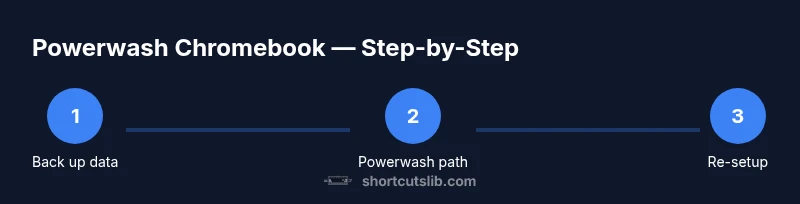
Step-by-Step Powerwash Flow: Using Settings (Overview)\n\nIf you prefer a hands-on approach, you can run Powerwash entirely from the Chrome OS settings flow. Start by opening Settings, navigate to Advanced, select Reset settings, and finally choose Powerwash. Confirm your choice to begin the reset. Expect the device to restart and present the initial setup screen afterward. The exact on-screen prompts may vary by Chrome OS version and manufacturer. This overview is designed to align with the main Powerwash process described by Shortcuts Lib to help users plan effectively.
What Happens After Powerwash\n\nPowerwash restores the Chromebook to its factory state, erasing local data and returning settings to defaults. You will see the welcome screens for Chrome OS setup, similar to a first-time setup, including language, network, and account prompts. Your Google account remains intact in the cloud, so you can sign back in and begin restoring apps and data. It’s important to remember that only data stored locally is erased; anything stored in Google Drive or other cloud services remains accessible after sign-in. This distinction helps users understand what to expect during the reset cycle and reduces anxiety about data loss.
Post-Powerwash: Restore Your Data and Preferences\n\nAfter completing the initial setup, sign back into your Google account to start restoring data and preferences. Begin with essential apps from the Chrome Web Store and reinstall any offline applications you rely on. If you backed up to Google Drive or an external drive, begin restoring those files and folders. Reconfigure settings such as wallpaper, accessibility options, and keyboard preferences to match your workflow. For keyboard enthusiasts, this is a chance to rebind shortcuts and tailor Chrome OS behavior to your needs. Shortcuts Lib emphasizes documenting the exact steps you take during restoration to ensure future resets are faster and less disruptive.
Troubleshooting Common Issues\n\nIf the Powerwash option is missing from Settings, verify that Chrome OS is up to date and that the device isn’t governed by an administrator who has disabled resets. If the sign-in shortcut at the login screen does not work, fall back to the Settings-based Powerwash path. A reset can fail due to power loss or insufficient storage; ensure the device is plugged in and that there is enough free space for the reset process. If you encounter unexpected prompts or errors, recheck backup integrity and consider performing a secondary backup before retrying. Shortcuts Lib recommends consulting official Chrome OS support resources for device-specific guidance.
Security and Privacy After Powerwash\n\nPowerwash is an effective way to wipe local data and reset settings, improving privacy on shared machines. After the reset, ensure you re-enable security features such as automatic updates, device encryption, and user account protections. If you use a managed Chromebook, review your organization’s policy on device provisioning and data retention. A clean reset also provides a clean slate for security testing and performance tuning, a common practice among keyboard shortcut enthusiasts who value meticulous workflows.
Authority Sources\n\n- https://www.google.com/chromebook/help\n- https://www.cnet.com/tech/mobile/how-to-powerwash-a-chromebook/\n- https://www.tomsguide.com/how-to/powerwash-chromebook
Tools & Materials
- Chromebook(Charged or connected to power for the duration of the reset)
- Charger(Keep within reach in case the device runs low on battery)
- Backup storage(Google Drive backup or external USB drive for local files)
- Internet connection(Stable connection helps during sign-in and data restore)
- Google account credentials(Password ready for sign-in after reset)
- External USB drive(Optional backup target forextra redundancy)
- MicroSD card(Optional for additional local storage)
Steps
Estimated time: 15-30 minutes
- 1
Back up your data
Create a secure backup of your documents, photos, and offline files. Use Google Drive to sync essential files, and copy important items from the Downloads folder to external storage if needed. This ensures you can restore critical data after the reset.
Tip: Double-check that the backup contains the most recent versions. - 2
Sign out of your Google account
Sign out of your Google account on the Chromebook you plan to reset to minimize synchronization during the reset. This helps ensure a clean slate and reduces post-reset sign-in conflicts.
Tip: If you share the device, perform sign-out before starting the reset. - 3
Open Settings and navigate to Reset settings
Open Chrome OS Settings, then go to Advanced and select Reset settings to reveal the Powerwash option. This path guarantees a user-confirmed reset on most devices.
Tip: If Reset settings is not visible, check for system updates or admin restrictions. - 4
Choose Powerwash and confirm
Select Powerwash and follow on-screen prompts to begin. Confirm your choice to initiate the reset. The device will erase local data and return Chrome OS to factory defaults.
Tip: Ensure you have a backup before confirming. - 5
Wait for the reset to complete
The Chromebook will restart and begin the factory reset process. This can take several minutes, depending on device speed and data volume.
Tip: Do not interrupt the process or remove power during reset. - 6
Initial setup after reset
Once the reset finishes, you’ll be prompted with a fresh Chrome OS setup flow. Choose language, connect to Wi-Fi, and sign in with your Google account to begin restoration.
Tip: Keep your Google account ready for a smooth sign-in. - 7
Restore data and apps
Sign back into Google, then reinstall essential apps and restore files from backup. Reconfigure keyboard shortcuts and system preferences to match your workflow.
Tip: Prioritize restoring critical files first to minimize downtime. - 8
Verify and finalize
Check that data is restored, settings are as desired, and devices such as printers or external drives work correctly. Perform a quick test of a few apps to ensure normal operation.
Tip: Document any tweaks for future resets.
Questions & Answers
What does Powerwash do on a Chromebook?
Powerwash restores Chrome OS to its factory state, erasing local data and restoring default settings. Your Google account remains intact in the cloud, so you can sign back in and restore data after the reset.
Powerwash resets your Chromebook to factory settings and erases local files. Your Google account stays safe online, and you can restore data after signing back in.
Will Powerwash delete all files?
Yes, local files in the Downloads folder and other non-synced data are erased. Files stored in Google Drive or other cloud services remain, but offline copies will be removed unless backed up.
Local files are deleted, but cloud-stored files stay safe after you sign back in.
Can I Powerwash from the sign-in screen with a keyboard shortcut?
Some Chromebooks support a keyboard shortcut at the sign-in screen to trigger Powerwash, but key combinations vary by model. If unavailable, use the Settings route.
Some devices support a shortcut at the login screen, but you may need to use Settings if it isn’t available on your model.
Do I need internet to Powerwash?
Powerwash itself can run without internet, but you’ll likely need connectivity to restore applications and data from Google Drive after setup.
You may not need the internet to start Powerwash, but you’ll want it to recover your files later.
How do I restore data after Powerwash?
Sign back into your Google account and restore files from Google Drive or external backups. Reinstall essential apps and reconfigure settings as needed.
Sign in again and restore your files from Drive or your backup, then reinstall apps and set your preferences.
What if the Powerwash option is missing?
If Powerwash isn’t visible, check for updates, verify admin policies, and try the Settings-based path. If issues persist, contact device support or admin.
If you don’t see Powerwash, update Chrome OS or check admin restrictions, then try the Settings path.
Watch Video
Main Points
- Back up data before Powerwash.
- Powerwash resets Chrome OS to factory state.
- Keyboard shortcuts vary by model—use Settings if shortcuts don’t apply.
- Sign back into Google and restore data after setup.