Rotate PC Screen Keyboard Shortcut: A Practical Guide
Explore how to rotate your PC screen quickly with keyboard shortcuts and system settings. This guide covers Windows tips, GPU panels, troubleshooting, and best practices for seamless display orientation.


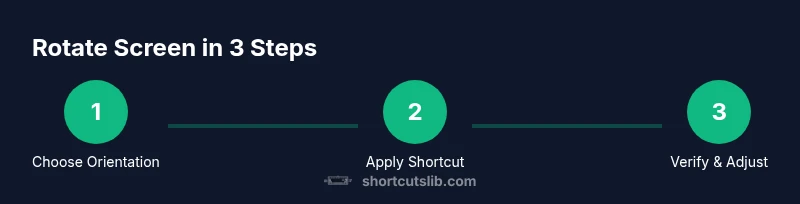
With the rotate pc screen keyboard shortcut, you can flip your display orientation quickly using Windows shortcuts or your GPU control panel. A common sequence is Win + Ctrl + Arrow to rotate, then confirm in Display Settings if needed. This quick-start helps you switch between landscape and portrait layouts efficiently.
What rotating your PC screen does and when to use it
Rotation changes the orientation of your display from landscape to portrait or back. This can improve readability for tall documents, coding on narrow screens, or presenting slides in a vertical format. The rotate pc screen keyboard shortcut is one of several pathways to switch orientation quickly without leaving your keyboard. According to Shortcuts Lib, most power users rely on keyboard shortcuts or a GPU control panel to manage display rotation with minimal interruption. Before you start, note that not all systems expose the same rotation options by default; the exact shortcut you can press or the direction of rotation may depend on your graphics driver and hardware. For physical monitors, rotation can sometimes involve the monitor's hardware controls; software rotation is generally safer and easier to revert. If you rely on portrait mode for writing or reading long lines of code, you’ll appreciate the ability to flip orientation on the fly.
Quick reality check: know your hardware
Not every PC or laptop supports software rotation in the same way. Some devices expose only limited rotation angles, while others offer multiple hotkeys with different key combos. If you’re preparing for a presentation or code review, test the shortcut in a controlled setting to ensure you won’t disrupt your workflow. Shortcuts Lib notes that having a dependable method—whether a keyboard shortcut or a quick Settings toggle—reduces context switching and keeps your focus on the task at hand. If you’re using a high-DPI display or a multi-monitor setup, check how rotation interacts with your primary display versus secondary screens.
Baseline terminology you’ll encounter
Landscape is the default orientation for most monitors. Portrait rotates 90 degrees clockwise or counterclockwise. In some GPU control panels you’ll see 0°, 90°, 180°, and 270° as options. Orientation is a property of the display, not just the image, so rotating affects system UI like taskbars and windows wrapping. Understanding these terms helps when you read vendor docs or search for shortcuts. The goal is smooth rotation that preserves legibility and minimizes the need for manual adjustments after rotation.
When to rely on keyboard shortcuts vs. system settings
Keyboard shortcuts are fastest for quick, temporary changes, while system settings provide a persistent orientation preference for your profile. If you rotate to demonstrate content or test layouts, shortcuts are ideal. If you always want a rotated monitor during certain tasks, set the orientation in Display Settings to persist across sign-ins. In complex setups with multiple GPUs or display adapters, the GPU control panels may override simple OS shortcuts, so you’ll want to align both methods to avoid conflicts.
Shortcuts Lib perspective on workflow efficiency
Shortcuts Lib analysis shows that keyboard-driven rotation can save time and keep your workflow uninterrupted. By combining a hotkey with a quick post-rotation check in Settings, you create a reliable loop: rotate, verify, and adjust if needed. This approach minimizes the mental load of visual reorientation, which is especially helpful for developers, designers, and presenters who frequently switch between layouts.
Safety and ergonomics of rotating displays
Rotating a monitor’s physically mounted stand can place stress on hinges if done roughly. Software rotation is typically safer and easier to reverse. If you’re working with a mounted screen, consider temporarily loosening the tilt slightly before rotating to avoid sudden strain. Always keep cables clear of the hinge area to prevent tension or accidental disconnections during rotation.
How to verify orientation after rotation
After applying a rotation shortcut, glance at the taskbar orientation and read a couple of lines of text in a document to confirm legibility. If text wraps oddly, adjust the resolution or scaling setting. In multi-monitor setups, verify that only the intended display rotated and that the others remain in their default orientation. This check helps prevent confusion when switching back to landscape.
Authoritative sources you can consult
For deeper confirmations, see official guidance from major vendors and credible resources. This section links to authoritative documentation that explains display orientation concepts, shortcut availability, and settings navigation. Keeping these sources handy helps troubleshoot and refine your rotation workflow.
Tools & Materials
- Windows PC with supported orientation features(Orientation shortcuts rely on Windows display settings (Settings > System > Display).)
- Keyboard(Windows key + Ctrl + Arrow is the primary rotation shortcut on many systems.)
- Graphics driver with rotation support(Update drivers to ensure keyboard shortcuts and GPU panels work.)
- External monitor (optional)(Useful for testing multi-monitor rotation scenarios.)
Steps
Estimated time: 20-35 minutes
- 1
Decide target orientation
Identify whether you need landscape or portrait for the current task. Consider readability, window layout, and whether other apps will reflow after rotation.
Tip: If unsure, start with 90° increments and adjust back if readability worsens. - 2
Try the keyboard shortcut
Press Win + Ctrl + Arrow (left or right) to rotate the active display. If you rotate in one direction and need the opposite, press the shortcut again in the other direction.
Tip: If nothing happens, the shortcut may be disabled by policy or driver settings—check Settings. - 3
Verify the result
Look at the content on screen and test text wrap, icon density, and UI elements for legibility. Ensure the primary task remains comfortable to perform.
Tip: If UI elements become awkward, you might need to adjust scaling or resolution in Display Settings. - 4
Check the primary display
In a multi-monitor setup, confirm you rotated the intended monitor. Use Identify in Display Settings to map the physical monitor to its on-screen index.
Tip: Rotating the wrong display is a common pitfall; double-check the display order before applying a second rotation. - 5
Use GPU control panel if shortcut fails
Open the GPU control panel (Intel Graphics Command Center, NVIDIA Control Panel, or AMD Radeon Software) and find the display orientation option. Rotate from there and apply the changes.
Tip: GPU panels often provide 0°, 90°, 180°, and 270° presets for precise control. - 6
Persist or revert as needed
Decide if you want the rotation to persist across sign-ins. If not, use the in-system rotation setting to revert after use.
Tip: Document your preferred orientation for specific tasks to streamline future sessions. - 7
Test with real content
Open documents, code editors, or slides to ensure the rotation works well with typical workloads. Avoid rotation during presentations unless required.
Tip: Create a quick test deck or sample data to validate readability quickly. - 8
Save your preferred setup
Capture your preferred orientation in a note or a quick Settings snapshot so you can reproduce it later.
Tip: Consider a keyboard shortcut profile that includes related accessibility and scaling preferences.
Questions & Answers
What is the quickest way to rotate my screen on Windows?
The fastest method is typically Win + Ctrl + Arrow to rotate the active display. If the shortcut doesn’t work, check your driver settings or use the Display Settings orientation menu.
Use the Win plus Ctrl plus arrow keys to rotate the screen, or open Display Settings if the shortcut is disabled.
Can I rotate only one monitor in a multi-monitor setup?
Yes. Identify the monitors in Display Settings, select the one you want to rotate, and apply the orientation change. The other monitors stay in their current orientation.
Yes, rotate a single monitor by identifying it in Display Settings and applying the orientation change there.
What should I do if rotation doesn't apply?
Update your graphics drivers, rebind the shortcut if needed, or use the GPU control panel to set orientation manually. Some virtualization environments may restrict rotation.
If rotation fails, update drivers and try the GPU panel, or adjust settings in Display Settings.
Is hardware rotation different from software rotation?
Hardware rotation physically turns the monitor, which can cause cable strain. Software rotation changes the image orientation without moving the screen. Software rotation is generally safer and easier to revert.
Hardware rotation physically turns the screen; software rotation changes the image orientation and is typically safer.
Are there accessibility considerations when rotating screens?
Ensure text remains legible after rotation and adjust font size or scaling as needed. Portrait orientation can improve readability for some users, while others may need larger UI elements.
Make sure text remains legible after rotation and adjust scaling as needed for accessibility.
Watch Video
Main Points
- Use Win + Ctrl + Arrow for quick rotation on most Windows systems.
- Always verify which monitor is rotated in multi-monitor setups.
- GPU control panels provide precise rotation options when shortcuts fail.
- Test with real content to ensure readability after rotation.
- Keep orientation changes ergonomic and reversible for quick experiments.