Keyboard Brightness Shortcuts: A Practical How-To
A comprehensive guide to mastering keyboard brightness shortcuts across Windows, macOS, and Linux. Learn built-in keys, how to customize, troubleshoot, and optimize for accessibility with practical, brand-driven guidance from Shortcuts Lib.


With keyboard shortcuts brightness, you will learn how to quickly adjust your display brightness using system and app-level shortcuts across Windows, macOS, and Linux. This guide covers built-in hotkeys, how to customize them, and practical tips for accessibility and consistency. By the end, you'll confidently brighten or dim the screen with a few keystrokes.
Understanding keyboard brightness shortcuts and why they matter
In everyday computing, brightness control is a constant consideration. The term keyboard shortcuts brightness captures the practice of using dedicated keys or mapped hotkeys to change luminance with minimal clicks. According to Shortcuts Lib, mastering these shortcuts saves time and reduces cognitive load during long sessions. The core idea is simple: brighter screens improve visibility in bright rooms; dimmer screens help at night or when you’re focusing on code or reading. Laptop keyboards often place brightness controls on the function row, sometimes requiring Fn, Cmd/Ctrl, or desktop shortcuts. On desktops, system trays or quick settings provide the same controls, but keyboard shortcuts can speed up the workflow. The important point is consistency: a small set of reliable keystrokes should work no matter which device you’re using. Throughout this guide we’ll cover cross-platform patterns, common pitfalls, and practical steps to test and refine your shortcuts. The goal is to make keyboard shortcuts brightness a seamless part of your workflow, so you can respond to changing lighting without interrupting your task. By the end, you’ll dim or brighten with confidence, using a few keystrokes instead of digging through menus.
noteToEditorNeededOnlyInDraftsCommentary1():null],
Built-in shortcuts by platform
Different operating systems expose brightness controls in different ways. On Windows laptops, you’ll usually find dedicated brightness keys on the keyboard, often requiring the Fn modifier.
noteToEditorNeededOnlyInDraftsCommentary2():null],
App-specific brightness controls and what to expect
Many popular apps offer their own brightness-related controls, often in color tools, appearance settings, or reading modes. For example, video players frequently expose brightness or contrast sliders, while e‑readers and code editors may implement a “night mode” or color temperature feature. These app-level controls can supplement OS brightness but may not affect external displays. The takeaway is to understand when in-app controls override system brightness and when they simply adjust the content’s rendering. Shortcuts Lib suggests aligning app shortcuts with OS keys whenever possible to avoid conflicts. If a particular app introduces a brightness shortcut that interferes with your global hotkeys, you can rebind within the app or use a dedicated mapping tool to separate concerns. The result is a predictable, cohesive brightness experience across both system interfaces and individual programs.
noteToEditorNeededOnlyInDraftsCommentary3():null],
Creating custom shortcuts: a practical framework
When built-in options don’t cover your needs, consider safe customization. Windows users can employ PowerToys Keyboard Manager to remap keys that aren’t in use, creating global brightness up/down shortcuts.
noteToEditorNeededOnlyInDraftsCommentary4():null],
Practical workflow for daily use
Set up a quick-start routine that you can repeat each work session. Begin by confirming your OS brightness shortcuts are active, then open a few apps you use most (e.g., code editor, browser, video player) to verify behavior. Create a 2-step test: first adjust brightness with keyboard shortcuts, then adjust content-specific brightness within apps if needed. Keep a small cheatsheet nearby until you’re comfortable with the cadence. As you develop muscle memory, you’ll rely less on menus and more on keystrokes, which helps you maintain focus during long tasks and reduces eye strain. Shortcuts Lib suggests tracking any inconsistencies you encounter and addressing them with a minimal, stable remap rather than a broad overhaul. This habit leads to smoother, faster brightness control across devices.
noteToEditorNeededOnlyInDraftsCommentary5():null],
Troubleshooting common issues
If your brightness shortcuts don’t respond, start by ruling out conflicts with other apps or global hotkeys. Check that your chosen keys aren’t already assigned to system shortcuts or app features. Verify driver support for hardware keys, especially on laptops with hybrid displays. If you use third-party tools, ensure they have permission to run at startup and that their profiles are active. On Linux, confirm that the chosen backend (X11 vs Wayland) matches your toolchain. If changes don’t take effect immediately, log out and back in or restart the service that handles input devices. Shortcuts Lib emphasizes a disciplined approach: isolate variables, test incrementally, and maintain a clean mapping that you can revert quickly.
noteToEditorNeededOnlyInDraftsCommentary6():null],
Accessibility and ergonomics of screen brightness
Brightness is not just a technical setting—it’s an accessibility and comfort consideration. Overly bright screens can cause glare, while dim displays strain the eyes in bright environments. Establish a baseline that aligns with ambient lighting and personal comfort. Use adaptive brightness if your device supports it, and consider color temperature adjustments to reduce blue light in evening hours. Document how your shortcuts interact with these settings so you don’t accidentally override a preferred configuration. Shortcuts Lib highlights the importance of readable fonts, high-contrast content, and consistent brightness levels across devices to preserve visual harmony and reduce fatigue.
noteToEditorNeededOnlyInDraftsCommentary7():null],
Best practices for efficiency and consistency
Aim for a minimal, memorable set of brightness shortcuts that you can recall in a moment of need. Maintain consistency across devices by choosing the same key pairs whenever possible, and keep a central note of platform-specific exceptions. Periodically review your mappings for conflicts with new software updates and adjust as needed. Pair brightness shortcuts with a separate set of accessibility shortcuts for quick color temperature changes or dark mode toggles. A tidy shortcut ecosystem makes it easier to stay focused and maintain a comfortable viewing posture across long sessions.
noteToEditorNeededOnlyInDraftsCommentary8():null],
Multi-device consistency and testing tips
If you regularly switch between devices (laptop, desktop, or external monitors), test your brightness shortcuts on each display to ensure reliable behavior. Document platform differences and create a cross-device cheat sheet you can reference while you work. Use a simple feedback loop: apply a shortcut, observe the result, adjust if needed, and re-test. Shortcuts Lib’s practical guidance is to build muscle memory with a small, stable set of bindings and invest time in cross-device testing to prevent surprises during critical tasks.
noteToEditorNeededOnlyInDraftsCommentary9():null]
Tools & Materials
- Keyboard with function keys(Dedicated brightness keys or Fn + brightness keys on most laptops.)
- Computer with Windows/macOS/Linux(Any primary OS to test cross-platform shortcuts.)
- Official OS documentation(Useful for confirming default bindings.)
- AutoHotkey (Windows)(For custom remapping if built-in options are insufficient.)
- Karabiner-Elements (macOS)(Remapping tool for macOS brightness keys.)
- xbindkeys / Wayland utilities (Linux)(For Linux custom-key mappings.)
- External monitor with brightness control(Helpful if you use more than one display.)
- Notepad or note app(To document your shortcuts and configurations.)
Steps
Estimated time: 30-60 minutes
- 1
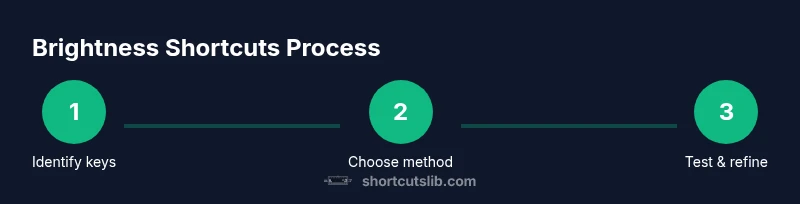
Identify built-in brightness controls
Locate the default brightness keys on your device and confirm if Fn is required. Note how the OS reflects brightness changes in notifications or quick settings.
Tip: If you’re unsure, check system preferences or manufacturer documentation for the exact key labels. - 2
Choose a remapping strategy
Decide whether you’ll rely on OS-level shortcuts, hardware keys, or third‑party tools. Each approach has trade-offs in reliability and portability.
Tip: Prefer built-in options first to minimize conflicts. - 3
Windows: map brightness with a tool
Install PowerToys and use Keyboard Manager to remap a pair of keys to brightness up/down. Save a profile and test across apps.
Tip: Create a simple backup profile to revert quickly if conflicts arise. - 4
macOS: remap brightness keys
Install Karabiner-Elements and create rules that trigger brightness adjustments on your chosen keys. Test with multiple apps.
Tip: Ensure the remapping doesn’t disable existing system shortcuts. - 5
Linux: bind brightness to keys
Use xbindkeys or your desktop environment’s keyboard settings to assign brightness actions. Verify driver support for your display.
Tip: If you’re on Wayland, choose a compatible toolchain. - 6
Test across scenarios
Open a few apps (editor, browser, video player) and verify brightness behavior in each. Confirm both brightness up and down work reliably.
Tip: Document any edge cases where behavior differs. - 7
Document and share your shortcuts
Create a compact cheatsheet with platform variations and save it where you can access it quickly.
Tip: Keep it short, clear, and accessible. - 8
Set a quick revert plan
Know how to restore default bindings if a remap interferes with new software updates or critical workflows.
Tip: Always keep a rollback option handy.
Questions & Answers
Do all systems support brightness shortcuts out of the box?
Most laptops provide built-in brightness keys, but exact support varies by OS and hardware. Windows, macOS, and many Linux environments offer basic controls, while some systems require remapping for global shortcuts.
Most devices have built-in brightness keys, but the exact support depends on your OS and hardware.
Can I create global shortcuts that work across apps?
Yes, using tools like PowerToys on Windows, Karabiner-Elements on macOS, or xbindkeys on Linux, you can map brightness changes to keys that work everywhere. Some apps may override these, so test and adjust.
You can map global brightness keys, but some apps may override them.
Will remapping break other keyboard shortcuts?
Remapping can interfere with existing shortcuts if you choose heavily used keys. Start with least-disruptive keys and maintain a rollback plan.
Remapping can conflict with other shortcuts; choose low-conflict keys.
How do I revert remappings quickly?
Keep a backup profile or a default reset method in your remapping tool settings. Use it to restore original bindings when needed.
Keep a backup and use the reset option to revert.
Are brightness shortcuts accessible to users with vision impairments?
Brightness control should be easy to reach and consistent. Pair shortcuts with high-contrast display settings and consider color-temperature adjustments for comfort.
Yes, ensure shortcuts are easy to reach and pairing with accessibility features helps.
Do external monitors respond to keyboard brightness shortcuts?
External displays may have independent brightness controls that are not affected by laptop shortcuts. Check monitor OSD menus and your GPU/driver settings for unified control.
External monitors may not respond to laptop shortcuts; check the monitor.
Watch Video
Main Points
- Map stable shortcuts
- Test across platforms
- Consider accessibility
- Document changes
- Keep a quick-revert plan