How to Do Keyboard Shortcuts: A Practical Master Guide
Learn how to do keyboard shortcuts across Windows, macOS, and apps. This step-by-step master guide covers design, customization, testing, and practice to speed up your workflow.


How to do keyboard shortcuts: This guide shows you how to do keyboard shortcuts to speed up daily tasks, customize keys, and avoid conflicts across Windows, macOS, and popular apps. You’ll learn a practical system, from design principles to testing, so you can implement reliable shortcuts quickly. This quick answer outlines the essentials and points you toward deeper steps in the full guide.
Why keyboard shortcuts matter in daily workflows
Keyboard shortcuts are small but mighty accelerants for productivity. They reduce manual mouse interactions, minimize context switching, and help you preserve cognitive load for more complex tasks. In practice, well-chosen shortcuts can shave seconds off repetitive actions, compound to save minutes across a work session, and lower the fatigue that comes from constant hand movement. According to Shortcuts Lib, a disciplined shortcut strategy can transform how you interact with the computer, turning habitual actions into fast, fluid motions. This section establishes the rationale: what shortcuts achieve, how they reshape daily flow, and the mindset you’ll need to design effective mappings that endure beyond one app or device. You’ll also see how to measure impact without turning the keyboard into a memorization maze.
Cross-platform fundamentals: Windows vs
How to design effective shortcuts
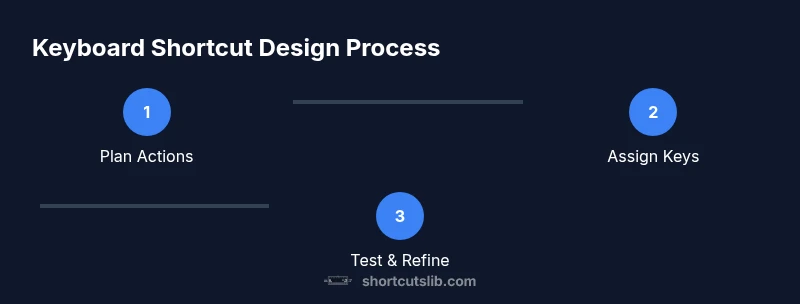
A well-designed shortcut is memorable, non-conflicting, and fast to execute. Use mnemonic relationships: pair the action with a representative key, favor modifiers to avoid accidental activations, and ensure the same pattern repeats across tasks. Start with a naming convention for your actions (e.g., CP for Copy, PP for Paste, UC for Undo/Redo) and apply it consistently. Document the rationale behind each choice so you can adjust if an app changes its own shortcuts. Avoid squeezing too many actions into a single key combination; better to distribute across a small set of strong patterns so you can recall them under pressure. Finally, test with real work scenarios to validate usefulness before committing to long-term adoption.
Practical categories and ready-to-use examples
Shortcuts naturally cluster into editing, navigation, and system/app actions. Common examples that work well across platforms include Copy (Ctrl/Cmd+C), Paste (Ctrl/Cmd+V), Select All (Ctrl/Cmd+A), Undo (Ctrl/Cmd+Z), Redo (Ctrl/Cmd+Shift+Z or Cmd+Shift+Z depending on app), and Quick Save (Ctrl/Cmd+S). For navigation, try switching tabs (Ctrl/Cmd+T), moving between sheets or panels (Ctrl/Cmd+Arrow keys), and opening the search box (Ctrl/Cmd+K). Within formatting and text, Bold, Italic, and Underline commands map to two-key patterns when appropriate. For accessibility, include high-contrast modes and zoom controls as separate, clearly labeled shortcuts. The goal is to assemble a compact, practical set you can memorize and reuse across your daily toolset.
How to test and memorize shortcuts
Testing should be iterative and task-based. Start by applying each shortcut in a real workflow—writing, browsing, coding, or spreadsheet work—and observe whether it saves time and reduces clicks. Use a dedicated workspace or a notebook to track successes and conflicts, and adjust as needed. Employ spaced repetition: practice a few times a day for 5–10 minutes, then gradually increase complexity. Build a habit of encountering the shortcut in context rather than trying to memorize in isolation. Finally, periodically audit your map to remove duplicates, resolve clashes, and add new actions as your toolkit grows.
Building a personalized shortcut map: a step-by-step approach
This section guides you through creating a tailored shortcut map that travels across devices and apps. Start by listing high-frequency tasks (copy, paste, navigate, search) and assign mnemonic, non-conflicting keystrokes. Then configure OS-level shortcuts in Settings/Keyboard; tailor app-specific shortcuts in the program’s Preferences; and keep a master reference document. As you implement, test each mapping in at least three representative apps to verify consistency. Always preserve a fallback text or undo option in case a new shortcut fails. Finally, schedule a monthly review to prune obsolete mappings and integrate user feedback from teammates.
Troubleshooting conflicts, accessibility, and safety
Conflicts are the most common obstacle when building shortcuts. If two actions share a key combo, reassign one with a different modifier or switch to an alternative mnemonic. Be mindful of accessibility settings such as sticky keys or key repeat behavior that might interfere with fast typing. For users with motor impairments, provide adjustable timing thresholds, larger targets, and clearer audio cues for shortcuts. Safety-wise, avoid remapping keys that control system-critical functions (like shutdown) and test carefully in safe environments before deployment. Document changes so others can adapt without confusion.
Documenting and sharing your shortcut library
A structured shortcut library acts as both a personal reference and a collaboration tool. Create a single source of truth: a map that lists action, OS/app scope, keystroke, and rationale. Use a lightweight format (markdown or a plain document) and keep it synchronized across devices via cloud storage. Share your library with teammates, solicit feedback, and maintain a changelog so updates are traceable. Finally, pair the library with a short training routine (e.g., a 15-minute weekly workshop) to reinforce learning and drive adoption across your team.
Tools & Materials
- Computer with operating system installed(Keep OS up to date; ensure keyboard works reliably)
- Text editor or note-taking app(For recording your shortcut map and mnemonics)
- Access to system keyboard/shortcut settings(Used to configure OS-level shortcuts)
- Blank notebook or digital document(To document rationale and changes)
- Reference apps for testing(Browsers, word processors, IDEs, email clients)
Steps
Estimated time: 60-90 minutes initial setup; ongoing maintenance 5-10 minutes per day
- 1
Assess tasks to optimize
List daily actions that happen most often (copy, paste, navigation, search). Rank them by frequency and impact on time. This determines which shortcuts will deliver the biggest returns.
Tip: Start with 4–6 core tasks to avoid overload. - 2
Inventory existing shortcuts
Review OS defaults and your most-used apps to identify gaps and conflicts. Note any actions that already have strong muscle memory to avoid clashes.
Tip: Document current shortcuts in a simple table for quick reference. - 3
Map targets to mnemonic keys
Assign actions to mnemonic keystrokes, preferring consistent patterns across platforms. Use modifiers to reduce accidental starts.
Tip: Use initials or meaningful letter-to-action cues to boost recall. - 4
Configure OS-level shortcuts
Open the system keyboard/shortcuts area and set global mappings. Test quickly in a neutral app (e.g., a text editor) before expanding.
Tip: Keep a backup of original shortcuts in case you need to revert. - 5
Configure app-specific shortcuts
In your most-used apps, set or adjust shortcuts to align with your OS-level map. Prioritize consistency across apps.
Tip: Avoid overriding essential app shortcuts that users rely on. - 6
Test with real workflows
Run representative tasks and observe time saved, errors, and conflicts. Iterate on mappings that underperform.
Tip: Record a before/after time comparison to quantify impact. - 7
Document and share your map
Create a master reference with action, scope, keystroke, and rationale. Share with teammates and collect feedback.
Tip: Include version/date stamps for traceability. - 8
Establish practice routines
Set a 5–10 minute daily habit to rehearse shortcuts in real tasks. Schedule monthly reviews to refine your map.
Tip: Consistency beats intensity—short, regular practice compounds over time.
Questions & Answers
What exactly counts as a keyboard shortcut?
A keyboard shortcut is a key combination that triggers a command in software or the OS, enabling faster execution without using the mouse.
A keyboard shortcut is a key combo that triggers a command, letting you perform tasks faster without the mouse.
How do I start if I am a complete beginner?
Begin with 4–6 universal actions (copy, paste, undo, save) and practice daily in a simple workflow to build familiarity.
Start with a few core shortcuts and practice daily in a simple task.
Can shortcuts be customized in all apps?
Most major apps and operating systems support shortcut customization, but some apps lock certain actions by design.
Yes, most apps let you customize shortcuts, but a few actions may be fixed.
How can I avoid conflicts between shortcuts?
Choose non-overlapping combos, prefer modifiers, and test your map in multiple apps to catch clashes early.
Pick distinct shortcuts and test across apps to prevent clashes.
Are keyboard shortcuts accessible for people with disabilities?
Yes, with adjustable timing, sticky keys, and screen reader-friendly prompts; customize shortcuts to suit needs.
Yes, accessibility features let you tailor shortcuts for different abilities.
What should I do if I forget my custom shortcuts?
Keep a simple cheat sheet or reference document and rehearse the mappings during short practice sessions.
Keep a quick reference sheet and practice regularly to remember them.
Watch Video
Main Points
- Identify high-impact tasks first
- Maintain cross-platform consistency
- Document your shortcut map
- Test thoroughly to avoid conflicts
- Practice daily to build muscle memory